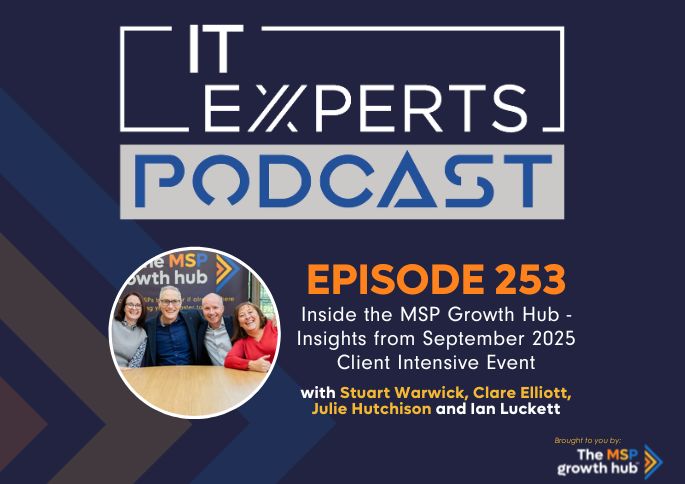
Stuart and I opened the room with a simple truth. Progress comes from consistency. The Intensive works because it anchors everyone to a living plan that links a three-to-five-year vision to an annual focus and down to a current sixteen-week sprint. When owners follow the process, complete their dashboards, and show up to the weekly rhythm, results compound. The Intensive is where that discipline gets renewed. People sit with peers, compare notes, and see with fresh eyes that the next leap is in reach when the right activity happens in the right order.
A major theme this time was sales and marketing as part of our Scale with Confidence model. Many owners had been waiting for a perfect moment to build a pipeline engine. The Intensive reminded everyone that the engine starts turning when daily activity is tracked, reviewed, and refined.
We unveiled a refreshed New Client Runway roadmap that simplifies the work into three plain steps with clear sub steps, templates, and ownership. The reaction in the room said it all. Heads were nodding. Teams could see what to do, when to do it, and who would lead each piece. Confusion lifted and energy rose because the path was visible. That is the purpose of the Intensive. Remove guesswork and create momentum.
Leadership development featured strongly. Our leadership coach, Julie Hutchison, helped owners face a vital question. Who do I need to be to lead this next phase. Not only what do I need to do. The distinction matters. Doing solves tasks. Being sets culture, creates standards, and unlocks others. Julie also highlighted the power of partners in the room. Spouses and business partners arrived a little cautious then quickly felt welcomed as integral contributors. Once they saw where they fit in the plan they spoke up with insight and took ownership of the levers they can pull. The Intensive gave them a safe space to step forward. That is a win for alignment and a win for home life too.
Finance was front and centre with our finance coach, Clare Elliott. Clare tied the sales and marketing conversation back to numbers that tell the truth. Run rate. Margins. Pipeline value by stage. Activity to meeting to proposal to sale. She challenged everyone to share financial targets with their teams so the whole business can rally. One client set a monthly target, shared it openly, and within forty-eight hours the gap narrowed to a few thousand pounds as the team pulled together. Another client crossed their million-pound milestone during the event. The cheer that went up summed up the spirit of the Intensive. Clear targets, shared ownership, and collective pride in progress.
Across the tables a pattern emerged. Several owners felt overwhelmed even as the business was growing fast. They were in the thick of success and could not see the wood for the trees. The solution in the room was practical and calm. Step up to thirty thousand feet. Look back at how far you have come. Reconnect to the plan. Trim distractions. Commit to three priorities for the next sixteen weeks and move everything else to the later list. The Intensive created that breathing space. People left lighter because they made decisions and booked actions with dates and names against them.
Community remains a secret weapon. The infamous quiz returned. Shirt of the day became a thing. Laughter flowed. Underneath the fun sits a very real benefit. Owners discover they are not alone. They swap playbooks, borrow templates, and set up follow up calls across the room. New friendships form that carry accountability far beyond the two days. The Intensive is a serious working event with a generous dose of human connection. That balance is why people come back.
My own light bulb moments were clear. First, our support tracks are landing. Transform Your Profits, Team Performance Engine, Future Leaders, and the marketing implementation track are lifting capability across the community. Owners are not only learning frameworks. Their finance leads, marketing coordinators, and service managers are in the room learning the same language and building the same muscle. Second, our refreshed marketing roadmap removed friction.
When people see the journey end to end, confidence goes up and action follows. Third, the message we share with the wider market needs to meet owners at the point where many decide to change. A large client leaves. A key staff member moves on. A retirement horizon becomes real. The Intensive surfaced that pattern again and it will inform our outreach so we can help at the right moment.
To close, here is the essence of this episode and of the Intensive. Scaling an MSP is a process. Know your numbers. Build a plan you believe in. Execute the right activities in a steady rhythm. Develop leaders who can think and act without you. Share targets so your team can win with you. Surround yourself with a community that will cheer you on and hold you to account.
The September Client Intensive delivered all of that. Plans were refreshed, confidence was renewed, and the ripple effect will show up in better weeks, stronger months, and a more valuable business. If you want your MSP to move from busy to purposeful and from hope to a clear path, the Intensive is where that shift begins and where it gets reinforced every time we come together.
Make sure to check out our Ultimate MSP Growth Guide, a free guide that walks you through a proven process to take your MSP from stuck to scalable, without working even more hours. It’s 44 pages rammed with advice, insights and inspiration to help you decide what support is available to you now if you want to grow and scale your business. Click HERE to get your copy.
Connect with Ian HERE on LinkedIn and also Stuart by clicking this LINK
If you’re ready to take the next step in supercharging your MSP, take the Scale with Confidence MSP Mastery Quiz. This tool is designed to help you understand where your MSP stands and what steps you can take to scale profitably and effectively. This will provide you with insights and guidance tailored to your specific needs.
OR to join our amazing Facebook Group of over 400 MSPs where we are helping you Scale Up with Confidence, then click HERE
Until next time, look after yourself and I’ll catch up with you soon!
IAN: In this episode of the IT Experts podcast, we open up the bonnet of the MSP Growth Hub and share with you the insights from our recent September, 2025 client intensive event.
INTRO: Welcome to the IT Experts podcast, the only podcast to help MSPs scale to 1 million, and if already there, get to five and go faster at the end of the day. Isn't it all about building a business that works for you rather than you for it? I hope you enjoy the show.
IAN: Good morning. Good afternoon. Welcome to the IT Experts podcast today. Super special show. We've got Stuart back and I'm managed to say that with all my teeth in.
STUART: You did indeed. Yes. Like great to be back as ever.
IAN: How are we doing?
STUART: Yeah. Fantastic. Buzzing after last week.
IAN: Absolutely right. In this episode we are going to be sharing with you coaches' insights from our two day client intensive that we hold three times a year, which is an absolutely incredible. Intensive event when we started doing them, they weren't that intensive for us, but they're getting a little bit more intensive. We've all said they're intensive.
STUART: They just get more and more intensive.
IAN: And what is it, Stuart? Why do people need to care about it and why do they need to listen to the show?
STUART: The listening to the highlights of the intensive is it's like the Nate label on the tin.
IAN: The cream on the top, right?
STUART: It is because the intensive is designed to be this cauldron where we bring everybody together. Same mindset. Same plan same objective in terms of they want to scale their MSP with confidence so it can work for them rather than for it to a point where it is valuable for them to hardly work in the business, if that's their goal, or to sell at a great exit value. And everyone's journey is different. However, the trajectory that we need to maintain to get there, and that was one of the big takeaways for me, or reminders for me, I think, because a lot of the time the intensive is designed to remind people that they're on the right track. And if you get that confidence, go, oh yeah, I'm heading in the right direction. You can double down and carry on and not think or doubt yourself or stop or think maybe there's a shiny ball over there, or take me, get me there quicker. And so as a result, the results come sooner and it's just every time we do the intensive, we come away, we have a big hug and we go, bloody hell that was amazing. And it was amazing. And we're like how do we make the next one amazing. And the next one's amazing as well. Yeah. And
IAN: Yeah.
STUART: It's a delight.
IAN: Yeah. It's incredible. It helps everybody reconnect back to their plan, reconnect as a group and also stop that thinking time. We keep talking about all of the time. Give us a bit of a flow. What do we include in these two days?
STUART: These two days are specific theme because we followed the scale with confidence model. And there are three key pillars to scaling with confidence. And this year or this time of the year, we're focused on maximize opportunities, which is all related to sales, marketing, account management, positioning in the marketplace, and how you exploit that. So the emphasis for this particular two days is around sales marketing, but of course it all gets laid out on the table because of the way we facilitate the groups and the tables and everyone's plan doesn't necessarily include sales and marketing, and in fact, it's one of the last things we get our clients to focus on. However, it's a really important one, and it's the one that everyone sits up straight and goes, oh, what's the secret of which there is no secret other than the secrets that you need to do on a regular basis.
IAN: And consistency.
STUART: And consistency.
IAN AND STUART: It's consistency. Boring. Which is really boring. It is really boring word in the world.
STUART: Isn't there a better answer?
IAN: No. I'm sorry. That's it. Keep doing keep cracking on following the process, trusting the process.
STUART: Trusting the process and reflecting. Say, is that working? No, it's not. Okay. I'm going to, I'm going to try something.
IAN: Adjustment.
STUART: Exactly that. So sales and marketing, is the big headline. However, actually the whole point of the intensive is it's part of the scaling process. And so three times a year we get everyone together to reset to take a breath, to take a step back, and to reset their current 16 week plan and make sure that it's aligned to their annual and their three to five year plan. Because then that takes the thinking out of, am I doing the right thing? Yeah.
IAN: Yeah. And we had an insight session on day one with Graham Stead, which was...
STUART: We did, we did deliberately, I think it rattled a few cages. It did because it was about mindset of sales director and so many MSPs are sub million, even sub two or 3 million are going sales director. What's one of those? And it's them in their own business. Most MSPs are sales led organization or director owner led sales organizations and it's this is what you need to think if you are a sales director. And so Graham brought great experience from very powerful session being a small MSP owner. And who'd exited. And then being in a much bigger acquisition led MSP, where he was sales director and had a large sales team. So he was able to bring two sides of the picture or the journey of being sales focused. And I think that really lit some light bulbs, but it also got people to question, actually, that's not me right now, but now I know what it looks like in the future when I need it. When we connected that with to the financial side or the forecasting side of run rate and numbers, and knowing your numbers from, if I'm going to get here in three years from a revenue or a gross profit or an operating profit of X, Y, or Z in three years, two years, one year what's it need to be next? Every month, every day, every week, every hour. And that kind of as that penny dropped, they were like. Ah.
IAN: What was interesting for me on that is to, and the comments that, to some of the, yeah, some of the comments we had back was that, what got you here is not going to get you there. The same people turn up in this room year in, year out, and the rooms getting bigger and bigger, which is incredible. I think there was probably 52, 53 people in the room which was brilliant.
STUART: And it, it make fills us with so much.
IAN: It does.
STUART: Pride.
IAN: Gratitude.
STUART: Gratitude, that's the word.
IAN: Yeah.
STUART: Gratitude.
IAN: Yeah, to be able to influence and to help and support. But the funny thing is we could run the same training format every single year for those three events. And every single MSP could still turn up, but because they're at a different place in their journey, they would hear, listen, and take away something new, because it's not there. It's easy to say, oh, I'm following this methodology, or I'm meeting up in this group, or I'm doing this. But if they're, we are moving at a hundred miles an hour here with the frameworks that I'm sure you are going to go into in a minute. And. Our clients will never catch us. I will guarantee that. However, it's fun having that chase on. What is the next thing we need to do to get them there faster?
STUART: It's and what do we need to repeat? Repetition is the mother of all learning. And so sometimes we do, we make no apology for repeating and say, guys, you need to dial this in first. You need to remember to do this or keep doing this. Because they're the fundamentals of whatever aspect of the business we're talking about.
IAN: What was your biggest takeaway? What was your biggest light bulb moment?
STUART: That it's a process. I know that's really boring. Again. But every time we do the intensive, I am reminded of that it is a process and why we need to remind everyone to follow the process. And everybody that does follow the process to the letter IE in terms of the dashboards we ask them to complete in regards to showing up to the different weekly things that we do. And there's not a lot, but they are designed purposefully to support the trajectory of their goals and to maintain the momentum against that trajectory. And it's easy to forget, oh, busy, oh, I'm not feeling like it oh, I got to fill my numbers in again. But actually we see it all the time, the discipline of those that do it, they get the results over time. And my biggest takeaway is just because so much is not so much of it's repetition, but there's so much structure to the format. It just reinforces every time to me oh, it is, it's such a process. And to watch everybody just see and hear a new thing each time and be able to then look at their plans because by the end of the two days, they've refreshed their plans. And so they came in thinking about it, they stopped, they reflected, they stirred the pot and they, then reset the plan in writing in the power app ready to go so that you and I can look at it the next day. And hold them accountable and provide even more detailed support. Because we're in we're connected to their plan.
IAN: Stuart, what were your biggest takeaways from the from the two days?
STUART: Always difficult to do. However, yet again, my takeaway as this is the last one of the 2025 series is that with all of the support tracks that we've put in place over the last two years, which is the transforming your profits, the team performance engine, the NCR, new Client Runway and the Future Leaders Development Program, those additional tracks that we've put into the core program my God, I don't, I look for another word on powerful. I was just talking about the power of the process. I'm reminded that it's a process, but it's just how powerful the process is we've connected and we said at the beginning of this, it's wow, that was amazing. And it was more amazing than the last one. And God, how do we make the next one amazing. But we've done 21 of these now over five years, and it's wow. They just keep getting more amazing because we just keep lifting it. But these support tracks, which is the done with you element of the frameworks around the scale with confidence methodology, just take it to a different level and just seeing the growth in people on their numbers, working on the Transform Your Profits piece, becoming better leaders and better managers or seeing their emerging management teams through the Future Leaders program starting to emerge and the confidence and communication skills developing there. It just reminds us of why we were going to do this. How can we help more people have more fun, change more lives, and have more impact? Because if we can get a hundred MSPs or more in the UK to north of 1,000,002, whatever their goal is, all boats rise and we're going to help more people earn more money, pay more tax, help more communities, contribute, more charity.
IAN: And it goes on The ripple effects. The ripple effects.
STUART: And we're seeing it happening. And gratitude is another, is that same word that keeps going back to me. So biggest takeaway, how powerful it is when you follow the process.
IAN: Yeah. Amazing. Good stuff.
STUART: So Ian, it's been amazing. What was your biggest light bulb moment?
IAN: The biggest light bulb moment was, scaring the life out of you, because you were on holiday for the week before the intensive and literally the day before you saw the final deck. So that's where I got some massive, you didn't hear that before, but that is my, the biggest...
STUART: And you did an amazing job.
IAN: Thank you. Thank you. It was a, I was in my happy place, because we're talking about sales and marketing.
STUART: I do you know what it does for me? It reminds me to go on holiday ball.
IAN: No. We need to stop just that. Although I might get ripped because we are just but you're about to go all day tomorrow recording this show as I'm just about to put my socks in the in the suitcase myself. Biggest light bulb moment for me was how we adapt and respond to our incredible clients. So we talked about the support tracks. New client Runway is our marketing and sales methodology. It was initially your methodology before we met. And four years later, we bolted every single thing to it. And like in my usual style it resembled probably a Swiss Army knife, but all the blades might not have been necessarily in alignment. We were with the sales and marketing implementation sessions that we're doing where we're bringing in all of the our clients' marketing support team, which is amazing, working with like mid-level people and helping them with their marketing. We realized that it was a time to step back, get up to 30,000 feet and have a little look and build a, redefine the roadmap and get it in place. So we put together a, an updated framework. It wasn't, it is an updated framework where we gathered basically every single thing that we know works in MSP marketing, even some custom gpt, which just blew their brains out.
STUART: Yeah, it did, indeed. Blew my brains out when I saw it work.
IAN: That was fun. That was fun. That take away a load of the heavy lifting the templates, the training and everything like that. And literally we've turned it into a three step process now, which has probably got I 50 steps in it. But it was lovely when everybody goes they came up afterwards and they go. Amazing. I get it. Now I know what I need to do, when I need to do it and who needs to do it more importantly, because we went into the team of your marketing team and I can see where I am on the journey and it was like job done. I am like super.
STUART: And you did do you know just to big you up. You did do an amazing job because there was nothing new in it, but it was reskinned not nothing new. There was some new additions to it, like the chat GPTs and stuff. But it was new in terms of just reset, reshuffled the order of things and made it even more simplistic, for people to follow. And those that were like, I get it, but I'm a bit confused of what I do next. Just went, wow. It's so simple, man.
IAN: And it just took all the guesswork out of what do I need to do? The only thing I didn't like about it, everyone kept mentioning Paul Green, which was a bit annoying because it was on my panel, on my presentation, and they kept saying how great Paul's content was. So there's a little shout...
STUART: And his content is great.
IAN: I know it is great, but he won't listen to this. Let's see if he does.
STUART: But you have to do something with it.
IAN: I tag a minute and see if he listens at 12 and a half minutes or something. But no, that was really cool. Because there's lots of different things that, different flavors that people take when they're marketing, whether it be telemarketing, cold email, whatever it might be. But we covered all those off. So that was really cool. That was the biggest moment was getting everybody really connected on onboard the marketing bus, which was super cool.
STUART: It was the jewel in the crown. Given that the focus was sales and marketing. So slightly differently. What shifts, challenges, clarity moments did you see over the couple of days?
IAN: I cannot believe when we started this right, we wanted to yep, get to a hundred MSPs and help more people and all that stuff we just spoke about. But neither of us knew the power and the depth of the community. That we built as a byproduct, right? And everybody knows if you've either a client or you're a past client, you will know Ian's shitty quiz. It's the shittiest quiz in the world.
STUART: It is. Okay.
IAN: We have a bit of fun. And Stuart said to us in the early days, we just need to have a bit of fun and games and stuff. And we turned this shitty quiz into an absolute hullabaloo. It really was. But this year it was just hilarious because one of our clients decided that we are now going to have a shirt at the day competition, which was great. So we went and bought a bottle of champagne from Forna and Masons got it branded and that was, and that started the second fun part of the quiz. But the clients, two of our clients, Phil and Steve, absolutely bonkers, there was something going on. They conned my car in to start with in the parking space, and I thought, what's happening here? And then they sat there and ate dinner, but they were done up with their jackets and you wouldn't believe, and you'd go on, go onto my LinkedIn profile and you'll see it, there's a post on there. They made some shirts with mine and Stuart's faces on them, which it was the first time that I, in particular and you following shortly after were absolutely speechless and everyone's going, your faces were just an absolute picture. So it was this mos mosaic picture of lots of lucket and lots of warwicks all over the t-shirt and it was a right giggle and a good crap. But on reflection, it was just amazing about how connected everybody is and they're helping each other out and they're talking on the tables and you can see them look across the room going, I need to go and talk to that person. Can I ever catch up with you about this? Or do you want to help with this? And we had a client yesterday and I just think that was just really, that was a another amazing thing about what we do at the Growth Hub. And also, if you're in any other community, you get having that depth of friendship and camaraderie and support. It's bloody hard work growing a business, right? Particularly in IT business. And we don't take that lightly. Some days I think, do you know what, this wouldd be quite cool actually to run an MSP other days go no. It wouldn't definite, definitely wouldn't do that. Maybe buy one, but maybe not do that. That doesn't sound like a good idea. And knowing that you can connect people together and they can find support, particularly as a lot of our the new people coming into our world, whether they're clients or events or whatever it might be, don't even know that this community exists. They don't even know this podcast exists. They don't even know that the support network out there exists. And I think that's quite sad. So we're on a mission to, to keep that flame alive as well. But yeah, the power of that community, and they're just bonkers, our clients.
STUART: They are.
IAN: They just really are.
STUART: It's hilarious. And it just speaks into that, one of those four takeaways for us of why we're doing it is how can we have more fun and have more impact change our lives. Yeah. And so it's that was a lot of fun.
IAN: Yeah. That was a good gig, wasn't it?
STUART: That was a lot of fun. So core takeaway, then you boil it all down. What was your core takeaway from the intensive?
IAN: The thing that was really interesting is while we were doing the intensive, I we brought a videographer in and he was doing some testimonial videos. When they're all together, we, it's nice to get some kind words and share with others, who we can help. But what was really interesting was that the kind of realization, so there's a bit of a marketing message here for anybody who's marketing their own business, is that the depth of the message that goes deeper and deeper and more relevant becomes you. You will then become more relevant to your target market. And what I realized was watching back through these testimonial videos, is the fact that everybody who came towards the Growth Hub had an event. They'd either had a large client leave and they've gone, whoa. We call them OOF moments. I think probably that's probably words a bit strong for, there's an o moment, a duck moment. That was it. A client's left, or a key member of staff has left. Or they've done, which I did a little bit and fluttered when you turn over the good old 5.0 and then all of a sudden you go, woo-hoo. Hang on a minute. I'm now looking at retirement. How much is my pension worth? How much is this business worth? How much am I going to sell it? Is it actually worth. As much as I thought it was going to be worth, OF it isn't right. I need to do something about it. So it's like the fact that everybody that you know that we come into contact with have needed to seriously accelerate with purpose and passion and structure is what I hear, which was really, if you want to grow your business can join a peer group. Go and join a community and you will learn stuff and you will get absolutely an incredible results just by being in the community. Picking up from the different podcasts and all the different things that's going on. Absolutely incredible. But, it's really, it's a good time to go on holiday, because I can go and do a little bit of thinking about this. But it's really interesting around our, what does our message need to look like in terms of, people have just had enough. I've been working for 17 years and I haven't had a holiday and all of these other things. So I thought personally, I knew the niche really well. And I think there's a whole new new thing there in messaging. Is that a takeaway? Yeah, I think it's a takeaway because if we didn't have the people together and they weren't so open and they weren't so connected and they weren't all on the same journey talking about the same things, I probably would've never known it.
STUART: Yeah. And by having that velocity of velocity size of community together. Yeah. You suddenly start to hear and see patterns and I think that's what you're talking about. Absolutely. You're seeing a pattern. And I think for anybody what we do has to be the right time at the right place. And change is normally something that comes out of a crisis. Absolutely. It normally comes out of a point. Do you know what? I can't keep doing what I've always done. I can't keep eating fast food like I did when I was in my twenties and drinking because I can't keep up with it. It's hurting my health. I need to do something. I think there's all those analogies in all other parts of our life and when it comes to your business, it's easy to coast for many years and it's okay, but then you realize actually I'm not going to get where I want to get now. And it's the right time, right place.
IAN: Brilliant. Thanks Stuart.
Let's listen to see what Julie and Clare picked up. Oh, I'd love to. Can't wait.
Julie, great to have you on this show and amazing to have you at the Intensive last week, and if anybody saw any social media posts. You did amazing with your poorly leg wheel. We all rallied around you, like your family wheeling you about. I must admit, I think I might have been a bit inappropriate when I thought I'd take you for a little spin. And maybe that was wrong, but it was still quite funny.
JULIE: Oh no, you were all beautifully. You lovely supporting me. It was really nice. Thank you.
IAN: No, that was great. But anyway back to business we just had the intensive. You as usual are an integral part of the Growth Hub here with the amazing leadership leadership work that you are doing. What's the biggest light bulb moment for you, Julie? What were some of the things that were popping up on the tables in the conversations at the bar?
JULIE: Yeah. One of the things for me, Ian, was around something that you do quite differently. And I loved this time particularly was that we had a lot of partners come this time and I just, what hit me was the power of partner.
IAN: Yeah.
JULIE: And that often, we have our. Wife or our husband or whoever, whatever it might be they're in the business, they're in the background, but they don't feel like they're included. They don't feel like they have a say or maybe they have half a say because they're not even there at the intensive. And and there's a lot of thinking going on. And what I saw was a group of people coming in that maybe initially were probably fairly nervous, but and maybe didn't feel like, oh, I don't belong, or I'm not really sure if I belong being absolutely welcomed into the throng of it all and being treated as a completely integral part of this business planning system. And that really was a big light moment for me was point where they realized that they were an integral partner, not just because we treat them that, but they realized, oh, hang on. I need to be that and I have an impact and I can be that and I can have an impact. Regardless of whether I'm officially the, the main person. But I am integral. There was a lot of that going on and I love that.
IAN: That was we see it quite a lot now, don't we? Because not only, as you say we've got the business partners but I think we've probably got, I'm going to say we've got six, maybe seven, husband and wife, yeah, marital partners, whatever you want to call it. I'm sure I'll get the wording wrong and offend somebody.
JULIE: But partners of some description.
IAN: Partners of some description. And what's lovely is, when they come in, it's a bit rab on the headlights, but then they start to see how they're welcomed. It's a safe place. There's no such thing as a silly question. And you can feel as the years go on, Julie, can't you? That the more and more the more and more partners that come in, the more and more comfortable the rest of them are and they'll gravitate and have a coffee together and it's a great thing.
JULIE: Very true. And we brought a couple of those partners up to speak as well, to...
IAN: Yes.
JULIE: Not just to validate them, but it did validate the fact that they are an integral part and that they have their piece that they're working on or whatever it is, and that they also do need to step up and can step up. And I think that's really important too, about who do they need to be in the business and who they want to be in the business.
IAN: Because you can just blunder along as long as you want really just doing a job in your own business. But when you know that what you are doing is pulling a lever that's either going to create transferable value or it's going to make your life easier, or it means that you can have more holidays or more profit or whatever it might be. I think that brings a why within the why doesn’t. So it's helps people really to bring that out, which is which is lovely.
JULIE: And that's a light bulb moment in itself, Ian, to be quite honest. The realization that actually you can choose.
IAN: Yeah. Yeah.
JULIE: And I think that's where, if I've got to choose now, I've got to think a little bit. Yeah. And put my big girl or boy pants on and and make those decisions. So Yeah.
IAN: Absolutely. What shifts and challenges did you see? What were some of the things where you'd seen people that were slightly different or they'd improved or that they'd made a big step forward since you saw them last?
JULIE: Yeah, I think there was one person in particular naming no names, obviously. Who literally at first refused to speak up and say anything refused and said, oh my goodness, if Stuart asked me a question, I'm going to die, basically, no, I'm not answering those questions. And the way in which we run the sessions and we run the way the whole, the intensive is. That it's okay to be vulnerable. It's a safe space. Absolutely. It's a challenging space, but it's safe. And so when that person and there was a couple of others, but particularly this person was like, I'm not speaking. I don't want to say anything. Suddenly realized it was okay. Then they perked up, they answered I never thought they would answer the question that they answered. And they were like, oh, I've got an opinion, I have a voice. And that really was a brilliant shift. And it was for a number of people just recognizing that it's okay to say what you really think. And to be vulnerable and ask those questions and have an opinion.
IAN: Core takeaways. What's some of the big takeaways from the intensive for you?
JULIE: I think the biggest thing is who do I need to be? And there was a big question about this. Who do I need to be to drive my business forward? Not what do I need to do, there's loads of that, but who do I need to be and I need to step up as a leader in the business and within that. If I don't want to be the only one in the business who's going to take those reins? Who else do I need to step up as a leader in the business? Yes. And we have our Future Leaders program and we've, I loved, we've got our first cohort, underway, our second cohort's, coming up soon. And that's the biggest thing is who else? Because otherwise you are the only mastermind of everything. Yeah. And you've got amazing people in the business and therefore to recognize, and we did a piece on that, recognizing. Who's got potential and how do I grow them to, to who they need to be. Not what they need to do, but who they to be. Need to be. And coupled with you doing that and them doing that, then you're going to create an amazing leadership team that can drive that business forward.
IAN: It's, and it's, for me, it's when you see people understand the the art of vulnerability where they actually go, do you know what, if you could, an SDM for example, if you could do that job better than me, I don't need to be, I should never be scared about that, and I should never be fearful of that. And I should actually congratulate the fact that you can do a job better than me.
JULIE: The weight of doing it all yourself is huge.
IAN: Yeah. The, and the worry is that obviously if I let go of the rains, it's all going to fall apart. The realization that actually, let's call them Bob, Bob actually does have a brain not just being told what to do and Bob can think really well, and actually he can tell me that I'm wrong and he's got better ideas than me.
JULIE: Fantastic.
IAN: Brilliant.
JULIE: Because then I can sleep and I can go on holiday.
IAN: Yeah. No that's great. Yeah. And you've done a great job with, I think we had 17 future leaders on the first cohort which is where we are now sharing with SDMs and senior account managers. The leadership frameworks we use at the Growth Hub, and I think we've got about 12, I think, for the next cohort, which is great.
JULIE: Oh, another couple of spaces then.
IAN: Yes. If you got a spaces and also thinking about. Who will be ready next year is another thing that a lot of the guys were doing as well.
JULIE: Yeah, and obviously we have a framework. We always have frameworks, don't we? Do we have a framework for helping you to work out who is your future leader, who are, should I say, your future leaders? That was really useful as well.
IAN: That was a great session you did then from your bench with a supported leg on one hand, and Stuart holding you in the other with the microphone. We helped you to deliver that session, which was great. Because sometimes you don't know, you can't just get someone and go, Hey, here's a coach, sort them out. They want to want it as well, don't they? Which is always a bit of a hard part of the question.
JULIE: Yeah. I think there's two ways to look at it, is there's number one, they need to want it. And the other one is they need to be showing. That they can think, not that they are already thinking as a leader, but that they can think in a more accountable way. And so it's all real. You saying, I wish my, I know seven second level tech would be a leader. Actually they have to be thinking. They might be really good technically, but they might not be ready for leadership. So you need to really work out, are they showing the real signs of potential?
IAN: Yeah. Brilliant stuff. Julie, thank you very much for sharing your insights from the amazing intensive we had last week. Wishing you a speedy recovery.
JULIE: Thank you.
IAN: To get you back up and running so that you can at least chase me and then give me a smack the back of the head being such a , maybe not kick straight away because that might hurt your leg even more. But anyway, thanks Julie. I'll catch up with you on a podcast real soon.
JULIE: Yeah, definitely. Okay. Take care.
IAN: Clare, our incredible finance coach, Clare Elliot, thank you very much again and welcome back to the podcast.
How are you doing today?
CLARE: Thank you, Ian. I'm very good. How are you?
IAN: I'm doing really well. Today we are going to as we're going to talk about the latest two day client intensive we have with our clients. And Clare is, it's the brainchild behind keeping all of these MSPs anchored to their numbers and focused on what really matters, which is what's in the bank, the assets, the cashflow, and all of this kind of stuff, which sometimes can be a bit dry, but are, Clare makes it super exciting. And you were with us for the first day, Clare, weren't you? What were some of the big, we obviously covered a lot. You heard in this podcast from, stuart and Julie and myself as well. But what was the big takeaway from you for the session?
CLARE: Yeah. I think one of the big takeaways was the sales and marketing piece with Graham, that was really on point, and I very much enjoyed how he did relate it back to financial. Indicators and metrics. Yeah. Which obviously is my thing, so I'm going to pick up on that. But yeah, just how he how it resonated through the group, how challenging sales and marketing is for everyone. We always hear this but there were a lot of light bulb moments in there as well, and it was just really interesting to hear his personal story. Yeah. And the challenges that he faced and how he overcame them and putting some real key metrics in place, to see that progression. Yeah.
IAN: So put a bit of context around there. Stuart held a an incredible far side chat with Graham Steed, who's also been on the podcast. Go and check him out. Who's from Growth Habits and he, the story he was telling us was all around the when he was a sales and marketing director of a very big MSP, that he's now exited from. And that's fine. But what they did a really good job of was, bringing down those, the elements of what happened. And she was saying how he was feeling. And it was called the mindset of a sales director. Many MSPs don't have sales directors because they're not big enough. But what he and Stuart did incredibly well was bring that down even to the one and two men bands and how you need to think about sales and that mindset and how that, how you approach that. And it was a, yeah, it's a really inspiring session. So much so Stuart went over time on that quite a lot, so I need to try and fix that for next time. But everybody was glued to them talking and that was great. What did he do? What was the thing for you that he brought in terms of the numbers and he really brought it back to the numbers that resonated with you from a finance point of view, Clare.
CLARE: I think it was keeping on track of your activities and always relating it back to are we progressing? And progression doesn't always mean a yes or a conversion to a sale, but it could just be eliminating somebody who's not going to progress with you. So it's just always monitoring that your activities are adding value to your business, be that coming into your business or be eliminating from it either way. And always having, being on top of it and knowing where you are and what I really liked was, as you've just said, that, he obviously ran a big MSP, so there was a lot of activity, but he brought it down to really minutia elements that anybody can implement, however small you are, everyone does some kind of sales and marketing, even if it's referral based, you're still converting that sale. And he just resonated with everyone I thought. He just, yeah, brought it down to earth.
IAN: Yeah, it was really good. If you want to check out Graham's growth Habits podcast that we did a little while ago, I can't think of what number it was off the top of my head. Go and have a look at the IT experts back catalog. It is there, it is a great show. Any particular shifts or challenges that you heard babbling up throughout the last couple of days?
CLARE: Yes. Do you know what? There was a couple of people who were discussing how challenging things were right now and what was super interesting, because we do often hear this, business goes through highs and lows. It's that continual cycle, isn't that? So we often hear about challenges, but this really stood out for me because it was challenges because everything is going so well. They're busy and they're so in the thick of it. And just a little bit, I dunno, not intimidated, but there's just so much going on, can't see the wood for the trees, can't see so many moving end of it. So many moving parts. And it was just so interesting that they were really struggling and yet as an outsider looking in, you're like, oh, you are doing amazing things. The benefits of what you're doing is going to just reap rewards for you. But at the same time, we can all see how when you are in it, you can't necessarily see the long-term plan of where you're going. But yes, that really stood out for me actually, was that rather than having issues that we need to deal with because they're issues, it was issues that, oh, because you're doing great things. Yeah, it's just such a hard time for you.
IAN: Yeah. And that's why we get them to stop and, jump up to 30,000 feet and have a little look down again. And it's really important that you have that vision in the forward plan. We talk about it all the time till we're sick in the teeth, but it's also just as important to stop and look in the rear view mirror and look at how far you've come, which is where you were. So they were probably sitting there moaning and groaning and whining and whinging, and you were sitting there going. Wow.
CLARE: Yeah.
IAN: Look what you've achieved. You're absolutely incredible. And you, when you are really in the detail of it, and you, when you think of it, you can sometimes think, and I'm sure people are nodding their heads now, listening to this going, yeah, I do that all of the time. But when you surround yourself full of people who are all on the same journey it's almost like you tick them off one at a time and it goes, that was negative thought. Positive. And I actually had a the world right? Is a. It's always a challenging place. It's always a difficult place and I don't want to get too deep on this, but it's hard work at the minute, right? Things are not going particularly well in the UK and there's other stuff going on. And I got an email from one of our clients the next day saying, amazing session. Thank you ever so much for hosting us. He says, I just needed that bit of motivation and that bit of positivity right now because life's hard. And his home life was hard. His work life was hard, but he took the time out to come and spend a couple of days with us and get immersed in it. And it was just great to get that and for you to experience that on your tables as well, I think is was brilliant. And it, that vulnerability, again, we talk about it every time, don't we?
CLARE: Yeah, we do. And everyone comes with the same level of commitment to, and it's not, I was going to say a commitment to the hub. Actually. It's not a commitment to the Growth Hub. It's a commitment to themselves and to their business. And they do come vulnerable. They do open up, we talk about, things, everything relating to their business. And as soon as one person says something, everyone else is, oh yeah. Yeah. I've, I'm either going through it or I've done input done that.
IAN: Yeah. Yeah. Yeah.
CLARE: Everyone is so supportive of everyone else and yeah, I think, I can't believe there's not a single person that doesn't leave with added value from those sessions.
IAN: Yeah, exactly. Exactly. Exactly, or a heart attack from eating too much chocolate or exhausted from the fun and games, or takeaways from this time. Clare, what have we got in your coming out of your session?
CLARE: Takeaways for me at the moment. So we are running our tips program. Which is a Transform Your Profits program, and we are just two sessions away from the end of our first cohort of that. So there was a lot of talk around that, getting a lot of feedback around that.
IAN: Great.
CLARE: That's been super insightful. A lot of the feedback I had it was quite varied actually, but it ranged from being Okay. It reinforced what I was doing. Yeah. So that was really positive. Yeah. So I know I'm on the right track. I know I'm doing the right things to, oh, or maybe it was there was some comments around, oh, that was a great idea. I hadn't heard of that, hadn't thought about doing that, so I'm going to implement that. And we've crossed the gap between, business owners and their finance people. So everyone is on this program and a lot of the owners were saying how sharing their financial objectives with their finance people and going into the detail that they need to understand, has really helped them and it's really progressed the reporting that they're getting, the key metrics that they're now reporting on. So that was really insightful. That was really interesting because as we know that I often advocate you do have to share financial information, and that doesn't mean confidential information. It just means share what you want to achieve, what your objectives are financially, because everyone's super motivated. And I think one of the best stories actually was where someone said that he shared his monthly target and they were just five grand off their monthly target.
IAN: Yes. Yeah.
CLARE: Within two days there were just a thousand pound off their monthly target because everyone rallied round and we still had a few days to go and it was like, yeah, we might still actually be able to do it. So I just thought that was absolutely brilliant and just showed the value of sharing your objectives and what you want to achieve with your team.
IAN: What about the couple who, when they went off to dinner, they needed to get three and half thousand pound before they hit their million, didn't they? Yeah. And they did it. They did it. They came back after breakfast and said, yeah, we did it. That was amazing. And there was this just this massive absolute massive cheer, which was fantastic.
What Clare was just talking about there with the TYP, the TIPS program, which is the Transforming our profit is in the last eight months, eight or nine months now, we've been building some support tracks within the Growth Hub. So now there's one on finance, there's one on leadership, there's one on your future leaders, and there's also one on sales and marketing as well. So that's where we're. We're not just giving you the framework, we're not giving our clients the framework. We're actually walking them through step by step, inviting finance people, inviting their marketing people in and inviting, their leaders into the Growth Hub as well.
And it's just blowing the absolute doors off. So thank you very much, Clare, for sharing. Amazing to have you. Thank you, as usual part of the team. Let's get ready for the next intensive message, January the next.
CLARE: I know, but it'll roll round and it's always so exciting.
IAN: It certainly will. So great to have you, glad you got some great nuggets out there and thanks for sharing today.
So thanks very much for listening to today's show. I hope you took away some golden nuggets. It's been absolutely brilliant. We love sharing our journey, don't we, Stuart, with the whole of the IT channel. And I think I'm just going to leave those value bombs there for you to marinade in and take away what you nail. And we'll catch up with you on the next show.
STUART: Yeah, look forward to it.
OUTRO: Wait, wait, wait, wait, wait. Just before you go, and if you're curious about how this episode links with the ability to scale your MSP to a million or, or if you are already there, accelerate to five, then we want to invite you to come and take the MSP Mastery quiz, and in just three minutes, you're going to get 360 degrees scan of your business where you can identify the one or two tactics that can help you find more time Engage in, align your people and help generate more leads in your msp. It's really simple. Just click on the link in the show notes and if you have enjoyed this episode, we'd love to get some feedback from you by means of a rating review on Spotify or iTunes, or your podcast platform of choice. We really appreciate every single one of them. Now, you can go and enjoy the rest of your day and we look forward to catching up and connecting with you soon. All the best.

The MSP Growth Hub is designed specifically for IT & MSP Business Owners who want to build a profitable IT & MSP business.
The MSP Growth Hub
Suite 215
Jansel House
648 Hitchin Road,
Luton, Beds
LU2 7XH
OUR TRUSTED FRIENDS OF THE GROWTH HUB